
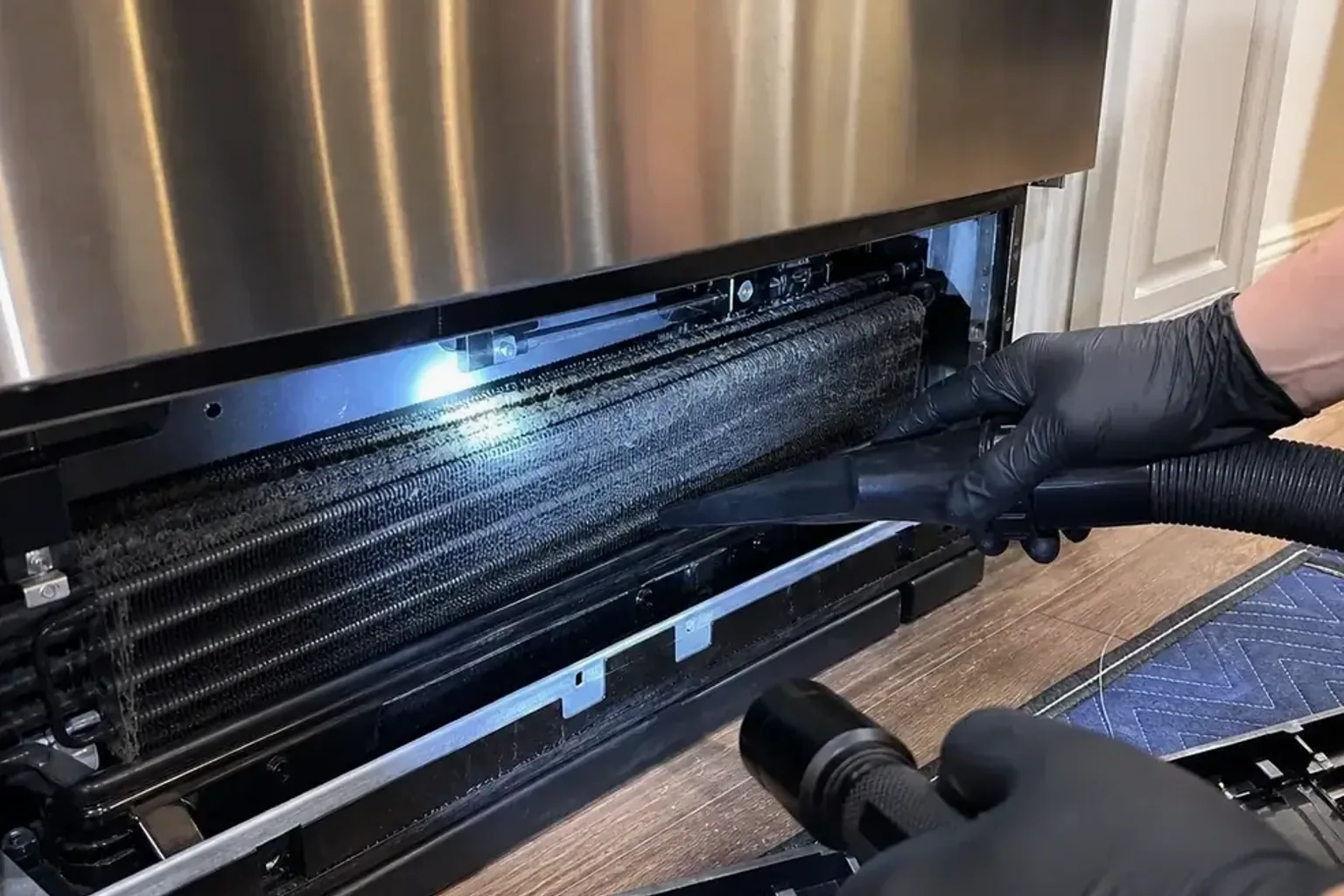
Last year I handled three repair-or-replace calls in Los Altos Hills that, taken together, answer this question better than any chart could. A 20-year-old classic near Altamont Road got retired. In Fremont Hills, a fourteen-year-old 600 unit had its refrigerant loop rebuilt and stayed right where it was. Near Foothill College, a column just seven years in needed one worn part and kept humming. Same brand, same town, three different verdicts.
This guide walks through each of those households in turn, because nearly every aging Sub-Zero in a 94022 kitchen maps onto one of them. Follow the reasoning behind each outcome and you will know, before I even ring the gate, which way your own decision is likely to fall, and exactly what would have to change for it to fall the other way.
Why Tell Three Stories Instead of Quoting a Rule?
Rules of thumb about appliance age keep failing in this town, because two units built the same year can be in wildly different shape. One spent two decades in a shaded kitchen getting its coils brushed every spring; the other baked next to a double wall oven and never saw a service visit. So rather than hand you a formula, I am going to hand you three real households, details blurred for privacy, and let each verdict show its own logic.
Read all three even if you believe you already know your category. The classic that got retired surprised its owners, and the mid-life rebuild that stayed surprised me too.
What Finally Retired the 20-Year Classic Near Altamont Road?
The first household had a unit set into their kitchen during a remodel around 2005. Over eighteen months it worked through a string of troubles: the freezer section faded first, then a temperature sensor drifted, and by the time I got the call the compressor was pulling noticeably above its rated draw. Opening the machine compartment told the rest of the story, with corrosion creeping along the liner edges and a heavy door that had started to drop on its hinge.
No single one of those faults would have condemned the unit. Stacked together, they meant these owners would be funding a fresh failure every season on a box that was deteriorating structurally at the same time. I told them to stop investing in it, and I stand by that. Had the compressor been the only finding, my advice would have gone the other way entirely.
Why Did the 14-Year-Old 600 Series in Fremont Hills Stay?
Household two noticed their 600 series had gone quiet and warm: the charge had escaped through a slow leak, which puts the job in the costliest category of Sub-Zero work. More than one outfit would have written the unit off over the phone.
I tested everything else before talking money. The door seals gripped a dollar bill firmly, the boards behaved, the interior looked nearly new, and the surrounding millwork had been cut for that exact column during an expensive remodel. Swapping it would have bought them a cabinetmaker, airflow modifications, and a five-digit invoice stacked on top of the appliance itself. Rebuilding the refrigerant side came in at a small share of that total and preserved a kitchen they loved. Fourteen years is mid-life for this brand when the rest of the machine measures strong, so this verdict was an easy keep.
Was the 7-Year-Old Column Near Foothill College Ever at Risk?
Not for a moment, though its owners did not know that when they called. A grinding whir from the fresh-food side had them pricing new columns online, convinced the noise announced the beginning of the end.
It turned out to be a fan motor running on a dry bearing, swapped from truck stock in well under an hour. Any Sub-Zero this young sits firmly in repair territory: every component is still in production, the design has years of intended service ahead of it, and one worn part says nothing about the next. If somebody urges replacement on a unit under ten years old, ask them to show you a second failing system. Without one, what you are hearing is a pitch, not a diagnosis.
What Pattern Connects the Three Verdicts?
Count the failing systems, then study the shell they live in. One fault on a structurally sound unit, at nearly any age, argues for fixing it. Several systems giving out inside the same year, on a box showing rust or sagging doors, argues for retirement. The Fremont Hills rebuild and the Altamont Road goodbye both followed that line precisely.
Parts supply is the third leg of the stool. Sub-Zero keeps components flowing for a long time, but the earliest columns run a refrigerant that regulators phased down years ago, and a handful of boards for pre-2000 models now take patience to hunt down. Scarcity can nudge a borderline case toward buying new; it never overrides a healthy machine with one bad part in it.
Which Scenario Is Your Kitchen Living In Right Now?
Before you pick up the phone, gather four answers. Find the serial plate inside the cabinet and note it, since those digits encode the build year. List every symptom from the past two years, not just this week's complaint, because memory hides the kind of stacking that decided scenario one. Note whether the trouble touches one compartment or both. Finally, shine a light across the interior walls and the door hinges and look for rust, pitting, or sag.
One recent symptom in one compartment with a clean interior puts you in the Foothill College story. A single big fault on an otherwise tight unit is Fremont Hills. A growing list plus visible decay means you should brace for the Altamont Road conversation, and it is better to have it once than to relive it every season.
How Do I Reach a Verdict at Your Door in 94022?
The visit runs the same order every time. I decode the serial plate, put gauges on the cooling circuit, clamp a meter over the compressor lead, and go through the liner, gaskets, and drain path. Then you get two written numbers side by side: the price to fix what I found, and an honest all-in figure for swapping a built-in of that size once carpentry and venting changes are counted.
I repair appliances for a living and sell none, so the verdict carries no commission in either direction. The truck is stocked with the frequent failure parts, which is the reason household number three wrapped up in one trip, and the long driveways off Page Mill and Moody Road simply mean I ask for the gate code before I head up the hill.