
A Sub-Zero built-in is engineered to run 15 to 20 years, and the dual-refrigeration design is the reason a single unit can outlast three ordinary refrigerators. Two sealed systems — one compressor for the fresh-food cabinet at roughly 38°F and a second for the freezer at 0°F — operate independently, which is why an estate owner in Los Altos Hills can lose ice while the produce drawers stay perfectly cold. That independence rewrites how every symptom reads: a warm freezer no longer proves the whole appliance is failing, and a humming fresh-food side rarely points at the freezer compressor. This guide, organized by root cause, walks Los Altos Hills owners through why the two sides drift on separate timelines, what the correct set points are, and where a $99 diagnostic — credited toward the repair — fits before any larger work.
Why does a Sub-Zero fridge and freezer fail independently?
Two complete sealed systems sit inside every Sub-Zero built-in: a dedicated compressor, evaporator, and refrigerant loop for the fresh-food cabinet, and a second full set for the freezer. Because each loop carries its own charge and its own control logic, the two sides age on separate timelines — a fresh-food evaporator can frost over from a tired defrost heater while the freezer keeps cubing without complaint. That separation is the root cause behind the most confusing Los Altos Hills service calls: owners assume a warm freezer means the entire unit is dying, when in reality only one of the two systems has drifted. A magnetic door gasket that has hardened on the fresh-food side, for instance, pulls humid Los Altos air past the seal and loads that evaporator with frost, yet leaves the freezer untouched. Reading which cabinet is actually off — and confirming it with a frost and condensation check on the built-in column, roughly $300-$650 — tells a technician which of the two loops to open first. Treating the appliance as one machine, rather than two systems sharing a cabinet, is the mistake that turns a targeted repair into an expensive guessing game. Los Altos Hills estates often run larger built-in and column units side by side, which multiplies the number of independent loops in one kitchen and makes accurate diagnosis even more valuable. Knowing that a frosted fresh-food coil and a healthy freezer can coexist keeps a good technician from condemning a compressor that is doing its job perfectly well.
What makes a Sub-Zero fridge make a loud humming noise?
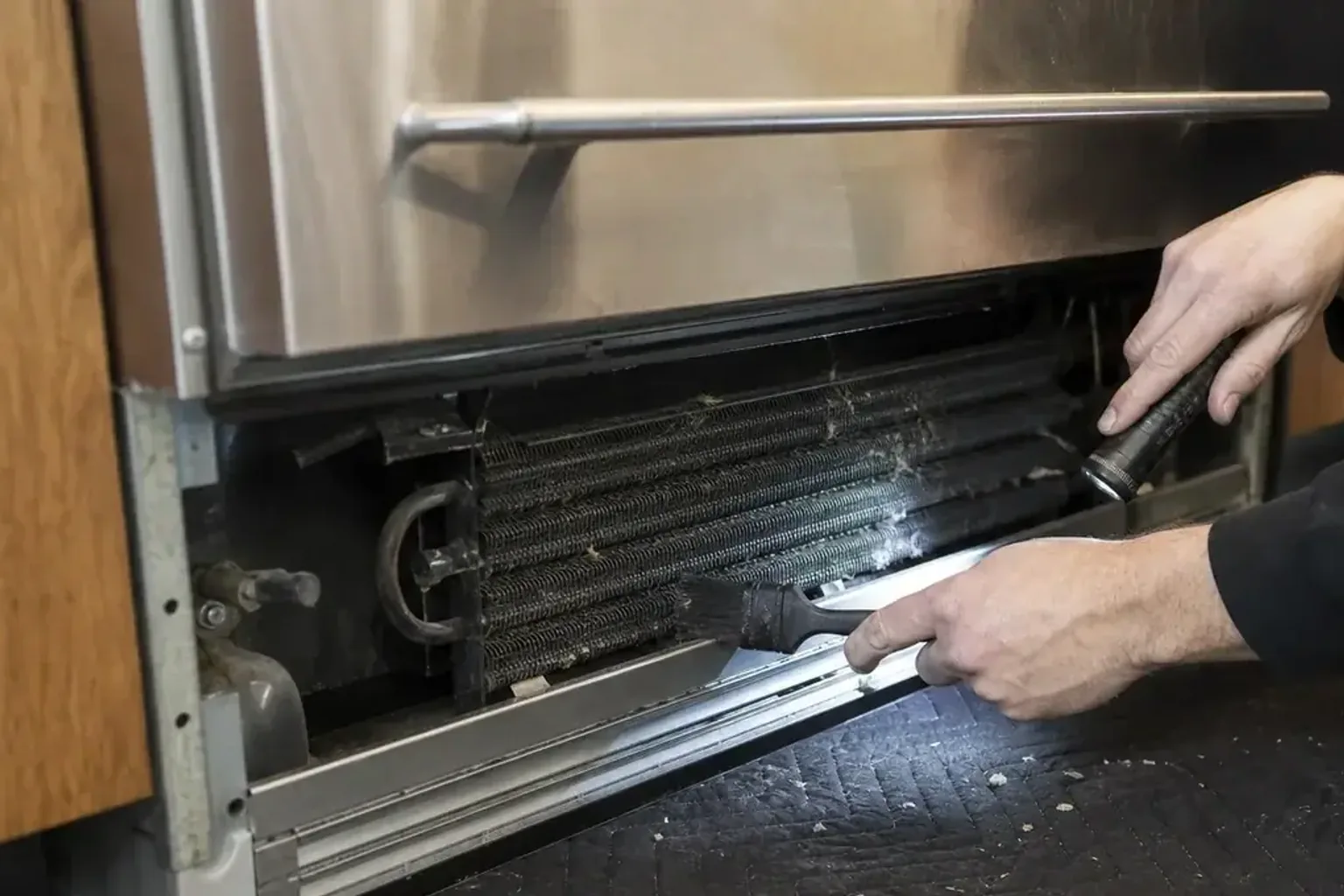
A loud hum almost always traces back to a motor under strain, and dual refrigeration gives you two compressors plus two evaporator fans and a shared condenser fan that could each be the source. Pinpointing the noisy system starts with location: a drone rising from the fresh-food compartment points at that evaporator fan or its compressor, while a growl from the lower rear usually means the condenser fan or the freezer compressor. A Sub-Zero condenser caked with Los Altos Hills dust makes the whole machine work harder and grow louder, and a simple coil cleaning often quiets it for months. When the noise arrives alongside a warm cabinet on only one side, the strain is real: a compressor short-cycling against a failing start component, or a control board misreading a sensor and never letting the motor rest. Matching a replacement control board to the exact production revision runs about $350-$900, and skipping that match is why some boards buzz right back within days. Distinguishing a harmless fan rattle from a compressor on its way out spares an estate owner from replacing the wrong sealed system — a distinction the two-compressor layout makes possible in the first place. Timing the noise matters as much as locating it: a hum that rises and falls with the defrost cycle behaves very differently from one that never quits. Owners who note when the sound peaks give the technician a head start on separating a routine fan from a compressor nearing the end of its service life.
How should the two set points read on a Sub-Zero?
Correct targets are simple and worth memorizing: 38°F in the fresh-food cabinet and 0°F in the freezer, the numbers Sub-Zero engineers around for both food safety and compressor efficiency. Drift away from those figures is itself diagnostic. A fresh-food side reading 45°F while the freezer holds a solid 0°F confirms the two systems are independent and isolates the fault to one loop — a gasket, a fan, or that cabinet's evaporator. A freezer creeping to 15°F while the fresh food stays at 38°F points the diagnosis the other direction entirely. Because the readings come from separate sensors feeding separate controls, one drifting number rarely means the whole appliance is failing. A hardened door gasket on either side lets conditioned air escape and forces its compressor to overshoot, and reseating or replacing that seal lands around $300-$650. When the freezer alone runs warm and the ice maker slows or stops, the water line or the ice maker assembly is the likelier culprit, roughly $300-$850, rather than the sealed system. Verifying both set points before touching refrigerant keeps a $99 diagnostic, credited toward the repair, from becoming unnecessary compressor work. Ambient load also shifts the readings — a Sub-Zero packed after a Los Altos Hills dinner party works its compressors harder for a day before settling back to target. Judging a fault on a single warm reading, taken right after the doors have stood open for an hour, invites a service call that a little patience would have spared.
When does a dual system need a sealed-system repair?
Sealed-system faults are the diagnosis of last resort, confirmed only after the gaskets, fans, sensors, and controls have all been cleared. A true sealed-system problem on a dual-refrigeration Sub-Zero shows up as one side that cannot hold temperature no matter how hard its compressor runs — a slow refrigerant leak, a restriction, or a compressor that has lost compression. Confirming it means gauges, a brazing repair, and a vacuum test on the affected built-in or column, work that lands in the $1400-$2900 band because it touches the refrigerant circuit itself. The two-system design actually protects the owner here: because each loop is sealed on its own, a leak in the fresh-food circuit does not doom the freezer, and only the failed system needs opening. A confirmed sealed-system fault on one side leaves the other running for years. Every Los Altos Hills visit still opens the same way, with a $99 diagnostic credited toward whatever repair follows, so the sealed-system verdict is earned by evidence rather than assumed. Reaching for refrigerant before ruling out a $350-$900 control board or a $300-$650 gasket is how owners overpay for a system that was never leaking.